
Game Design
Rules, loops, interactions and progression structures that establish what players do and why it remains understandable.
We approach game development as a connected product problem: gameplay, interface, services, performance and post-launch work need to support the same player experience.
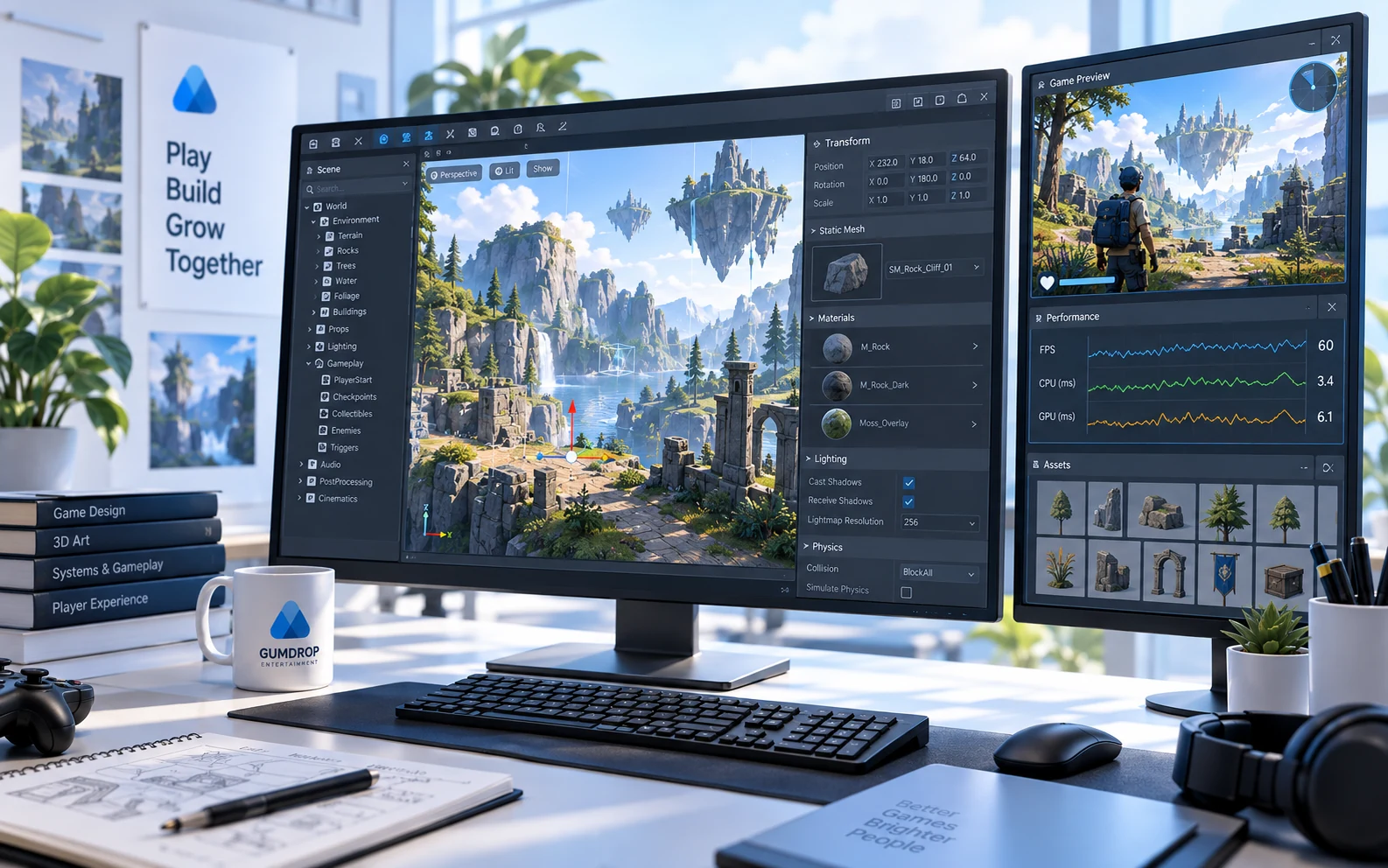
The exact scope depends on the product, but the work typically spans interaction, runtime behavior, connected features and production reliability.
Rules, loops, interactions and progression structures that establish what players do and why it remains understandable.
Player control, systems, interaction logic and runtime behavior implemented with maintainable structure.
Menus, HUDs, feedback, navigation and interface states composed around gameplay context.
Identity, progression, session state, content and other features that rely on networked services.
Service APIs and product infrastructure that support game features without leaking operational complexity into the client.
Session-oriented systems, shared state and supporting flows for connected player experiences.
Runtime profiling, asset discipline and performance work focused on stable product behavior.
Operational support, release workflows, content updates and service visibility after launch.
Regression fixes, compatibility work and technical improvements that keep the product supportable over time.
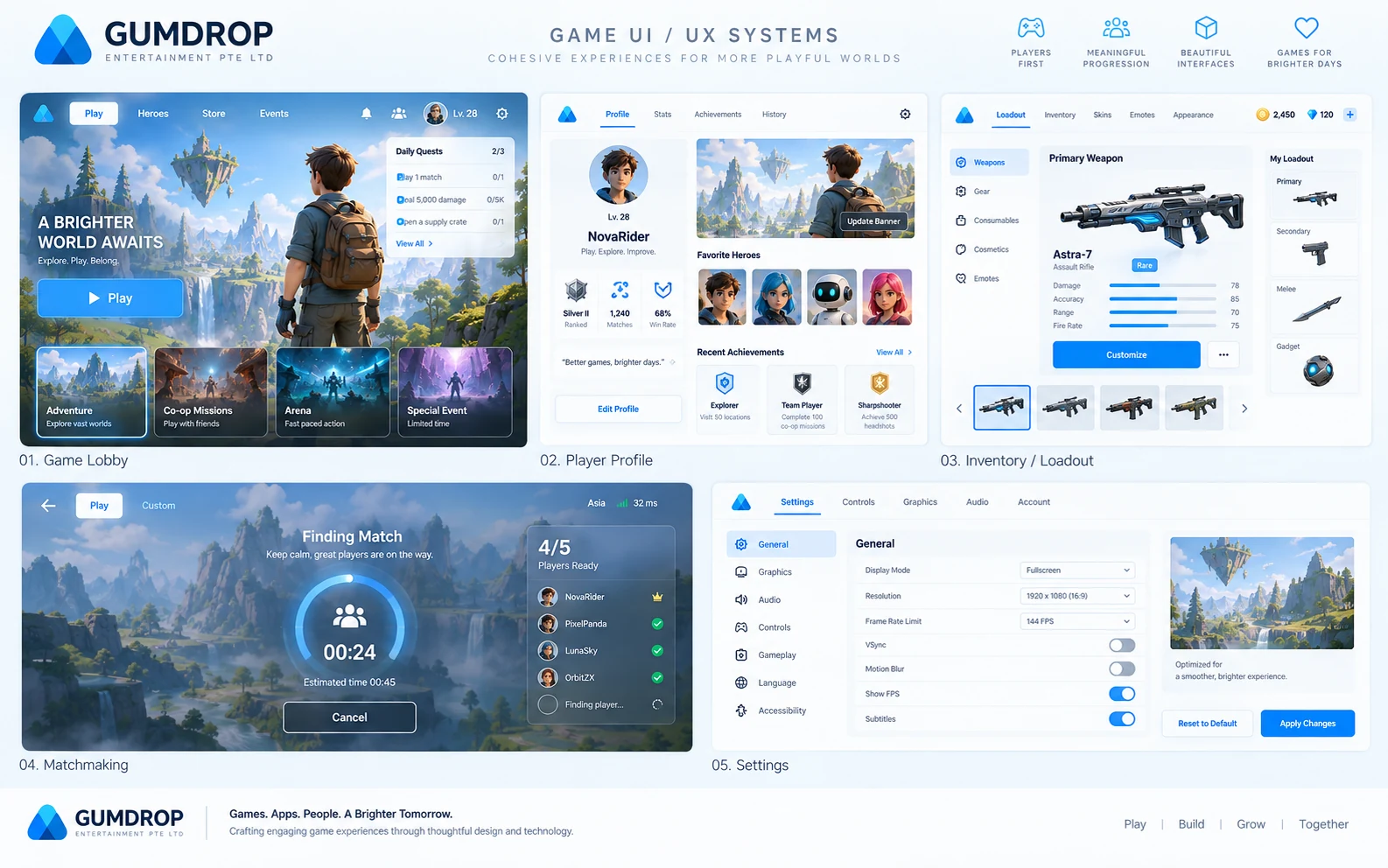
Game interfaces need to communicate system state without competing with play. We structure menus, HUD elements, progression surfaces and connected states as one coherent interface system.
The sequence is deliberately simple: validate the core interaction early, integrate systems progressively and keep release support connected to development.
Tell us what you are planning, where the product stands today and what you need next.