
Editorial Topic · Game Development
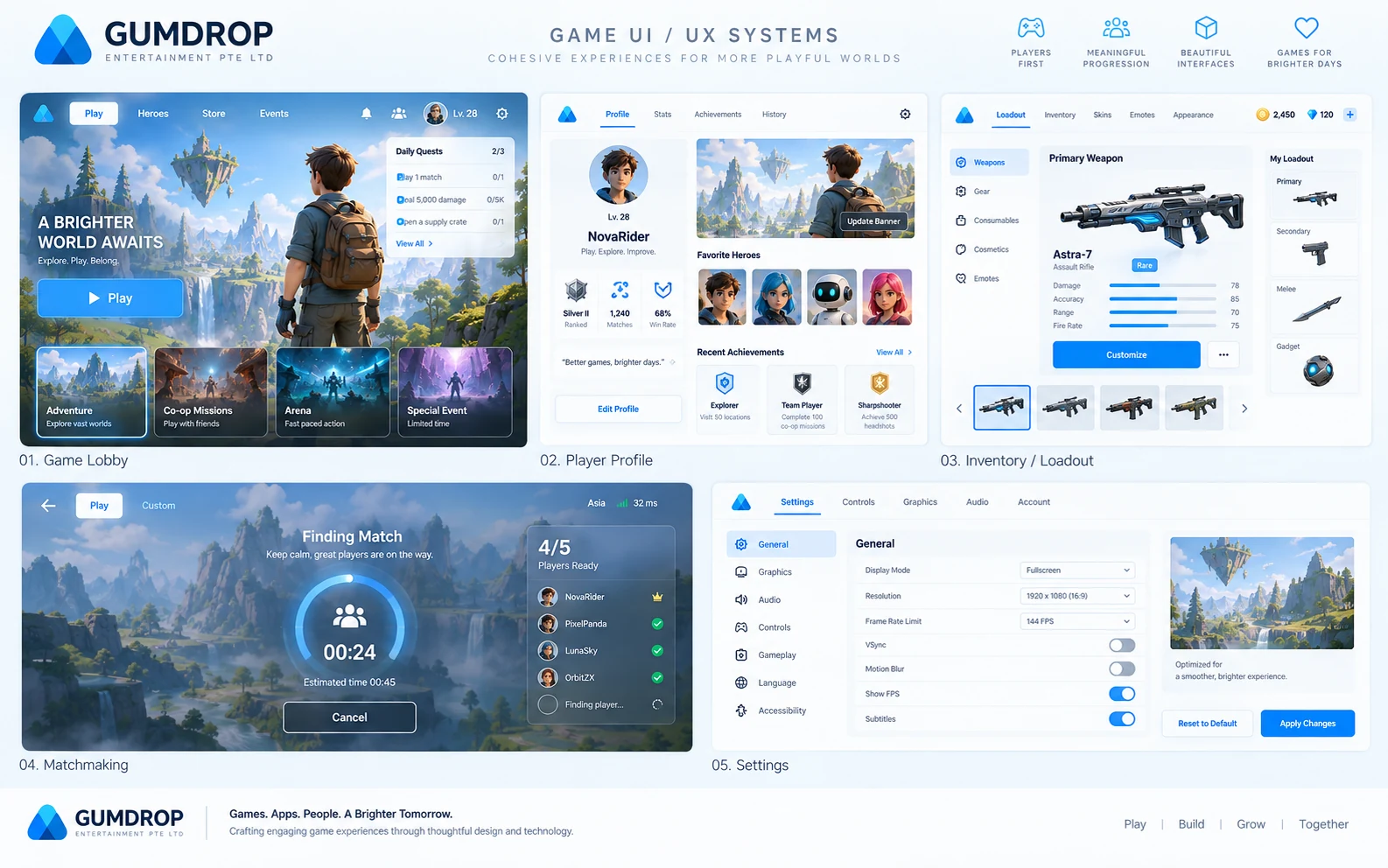
Designing responsive game interfaces.
How hierarchy, state, input context and runtime feedback can shape a game interface that supports play instead of covering it.
This page is structured for educational and technical editorial content. The topics below are content examples, not a fabricated publication archive.
How hierarchy, state, input context and runtime feedback can shape a game interface that supports play instead of covering it.
No publication dates, author histories or performance claims are shown because those details have not been supplied.
Questions to answer before interface code, backend contracts and release pipelines become difficult to change.
A practical look at release cadence, operational visibility, content changes and technical boundaries.
How identity, state, content and service reliability influence product behavior inside the game client.
Why frame time, network behavior and interface responsiveness should be discussed before final optimization.
Using prototypes to answer the difficult interaction and system questions before production expands.
Tell us what you are planning, where the product stands today and what you need next.